

THANK YOU FOR SUBSCRIBING

Pharma Tech Outlook Weekly Brief
Be first to read the latest tech news, Industry Leader's Insights, and CIO interviews of medium and large enterprises exclusively from Pharma Tech Outlook
A featured contribution from Leadership Perspectives: a curated forum reserved for leaders nominated by our subscribers and vetted by our Pharma Tech Outlook Advisory Board.


Currently, most gene therapies are being developed for rare and serious diseases. In vivo gene therapies tend to be one treatment only and many use invasive delivery methods. On the other hand, ex vivo gene therapies involve complicated and lengthy preparation processes. These and other complications made it very difficult to design place bo-controlled trials. So far, all approved gene therapy products have used historical data as control groups, either data from a natural history study (e.g., Zolgensma, Libmeldy) or historical data prior to treatment (e.g., Roctavian, Luxturna, Zynteglo).
FDA opens to use historical (external) controls in specific circumstances. “FDA regulations recognize historical controls as a possible control group… however, inability to control for certain biases could limit the ability of externally controlled trials to demonstrate substantial evidence of effectiveness. However, bias may be mitigated in certain situations where the disease course is predictable and the treatment effect dramatic.” (FDA Draft Guidance “Rare Disease: Natural History Studies for Drug Development”)
Roctavian for treatment of hemophilia A is a good example - Historical data plus 6-month of prospective non interventional data have been used as historical control to assess clinical outcomes in its pivotal registration study. The disease course is predictable and treatment effects were dramatic.
“Prospective longitudinal natural history study can inform the design of the first-in-human and pivotal registration studies for gene therapy.”
The same FDA Guidance also states that “data and information from a natural history study may provide an untreated, external control group for use as the comparator to the treatment group(s) in an investigational drug trial.” There are multiple Guidance documents reiterate the usefulness of natural history data as external control group.
Prospective longitudinal natural history study can inform the design of the first-in-human and pivotal registration studies for gene therapy. It informs natural history of the disease regarding disease manifestation, onset and progression over time. In clinical trials, it can help to determine what stage and type of the disease to target, ideal time for intervention, patient eligibility criteria, duration of the trials, frequency and timing of data collection, clinically meaningful outcome measurements, and biomarkers, etc.
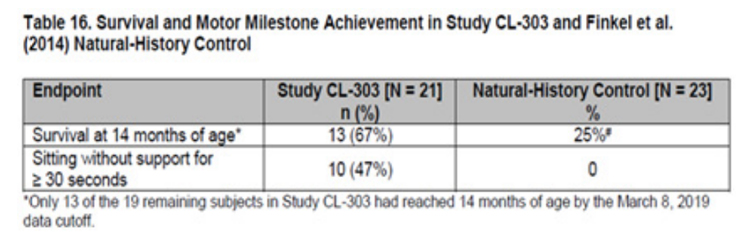
Zolgensmais an approved gene the rapy for spinal muscular atrophy (SMA). SMA is an autosomal recessive neurodegenerative disorder caused by mutation of the SMN1 gene. SMA Type 1 is the most common monogenic cause of infant mortality. Disease progresses rapidly and resulted in mortality or requiring respiratory support by 2 years of age. During Zolgensma clinical development, it took advantage of the available data from a previously conducted natural history study. Natural history study data helped both phase 1 and 3 studies to pick the ideal birth months for gene therapy intervention (initially =<9 months, later revised to =<6 months), determine the clinically meaningful endpoints (co-primary endpoints of survival at 14 months of age and sitting without support for 30 seconds), and study duration (individualized follow-up duration of reaching age 18 months in the pivotal registration study) to name a few. And most importantly, natural history data served as the control in both phase 1 and 3 studies to demonstrate robust efficacy and favorable safety profile of Zolgensma treatment.
 While natural history study can be very informative, it demands careful early planning. It necessitates a decision to conduct it in-house or work with others such as disease foundations, or with other companies in the precompetitive space. It takes much longer time to conduct such a study, and it can be costly as well as resource intensive.
